
presents

Materials North America
Copper and Brass Sales
Evolving with Purposeby Brian Diephuis

One of the things I've always appreciated about manufacturing is that the real problem is rarely the one you see first.
A conversation might begin with a question about material availability, pricing, or lead times. A customer may think they're looking for a supplier. But after a few questions, the discussion often becomes much broader. Suddenly we're talking about engineering support, processing capabilities, inventory strategy, logistics, or finding ways to simplify an increasingly complicated supply chain.
That's because manufacturing has changed.
The challenges our customers face today are more interconnected than they were even a decade ago. Production schedules are tighter. Supply chains stretch across continents. Skilled labor remains difficult to find. Expectations continue to rise while timelines continue to shrink.
The companies that thrive in this environment aren't simply buying products.
They're looking for partners who can help them solve problems.
Ironically, as manufacturers have evolved to meet those expectations, many of us have created a different challenge along the way.
We've become more complex ourselves.
Growth is a sign of a healthy business. It reflects investment, innovation, and the ability to meet changing customer needs. Companies expand into new markets. They add capabilities. They develop specialized expertise. They acquire businesses. They invest in technology. Every one of those decisions can strengthen the organization.
But each one also adds another layer.
Over time, organizations can become so focused on building new capabilities that they forget to ask a simple question:
Is it becoming easier, or harder, for customers to understand everything we can do for them?
That's an important distinction.
Complexity inside a business isn't necessarily a problem. In fact, sophisticated organizations should be complex. Expertise takes specialization. Engineering requires depth. Manufacturing demands precision.
The problem occurs when customers have to navigate that complexity themselves.
I've seen organizations with exceptional capabilities that were difficult for customers to fully understand. Different brands. Different business units. Different teams. Different entry points. Each one made sense independently, but together they required customers to connect the dots.
Customers shouldn't have to do that work.
Every minute they spend trying to figure out where to start is time they're not spending solving their own business challenges.
That's why I believe clarity has become one of the most overlooked competitive advantages in manufacturing.
When customers clearly understand who you are, what you offer, and how your capabilities work together, better conversations happen sooner.
Instead of asking, "Can you supply this material?" the discussion becomes, "How can we solve this problem?"
That shift changes the relationship.
It also changes the value a company can provide.
Across manufacturing, we're seeing more organizations rethink how they present themselves to the market. They're integrating capabilities that once operated independently. They're breaking down internal silos. They're creating simpler customer experiences while building more sophisticated organizations behind the scenes.
That isn't about branding for branding's sake.
It's about reducing friction.
In today's business environment, reducing friction is one of the most valuable things a company can do.
Customers already manage enough complexity. They don't need their suppliers adding to it.
They need organizations that are easier to understand, easier to engage, and easier to work with who can enable them to accelerate performance.
That's one of the ideas that has shaped our own evolution to tk accelis Materials Plus.
Over the years, we've continued to expand our capabilities across materials, processing, manufacturing services, and technical expertise. Each addition strengthened what we could deliver for customers. At the same time, we recognized that our external identity needed to evolve alongside the business itself.
Bringing our businesses together under tk accelis Materials Plus wasn't about changing who we are.
It was about making it easier for customers to recognize who we've become.
Today, a conversation that begins with one material may quickly lead to a manufacturing solution. A processing discussion may uncover opportunities involving entirely different material categories. Customers don't think in organizational charts, and they shouldn't have to. They simply want the right expertise brought together to solve the problem in front of them in order to increase value.
Our responsibility is to make that as seamless as possible.
The same principle applies inside the organization.
When our teams share a common understanding of who we are and what we offer, collaboration becomes more natural. Expertise moves more freely across the business. Customers receive better recommendations because our people can confidently connect them with capabilities they may not have realized existed.
That alignment ultimately benefits everyone.
Looking ahead, I believe this will become increasingly important throughout our industry.
Manufacturing will continue to evolve. Customer expectations will continue to rise. New technologies will emerge. Supply chains will become even more dynamic. Organizations will continue expanding their capabilities to keep pace.
The companies that stand apart won't necessarily be the ones with the most capabilities.
They'll be the ones that make those capabilities the easiest to access.
Growth will always matter.
Innovation will always matter.
Expertise will always matter.
But none of those create their full value unless customers can clearly understand how they come together to solve real problems.
That's the opportunity in front of all of us. Not simply to build stronger companies, but to build companies that are stronger because they're clearer.


Leading With Care: Strengthening Safety Across Our Organization
Safety is a shared responsibility, built into how we work, lead, and support one another every day. We are committed to fostering
How Investing in Talent Positions Us for What Comes Next
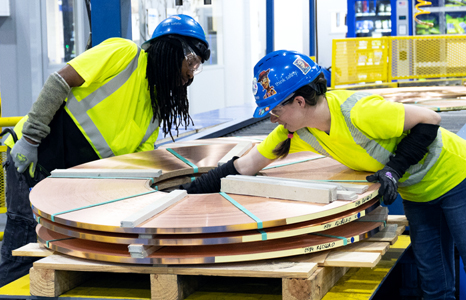
Copper and Brass Sales, thyssenkrupp Engineered Plastics, thyssenkrupp Materials NA Canada, and Online Metals has continued hiring through 2024, 2025, and into 2026. While others are pulling back, we are intentionally investing in our workforce, our capabilities, and our ability to serve customers at a higher level...
How Modern Manufacturing is Redefining Materials Supply
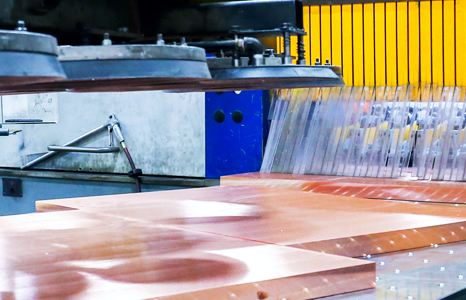
The world of manufacturing looks very different today than the one I entered decades ago. For much of the last century, the industry ran on long, predictable cycles. Product designs stayed the same for years, tooling was optimized around stability, and production lines ran steadily with only incremental change.
The goal was stability. If you could run efficiently and keep the system consistent, you would be in good shape. That model worked well for a long time. Manufacturing today operates in a very different environment.
Lights-Out Manufacturing: How Material Selection Drives Performance
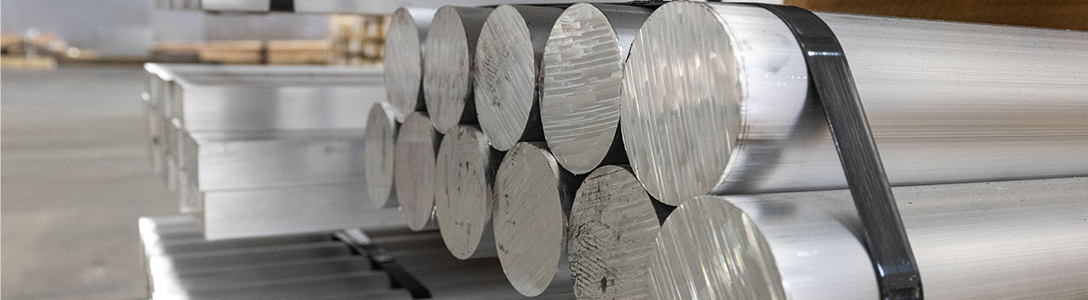
Manufacturing is operating in a new reality. Skilled labor shortages continue, margins are tight, and customers expect shorter lead